
Ans. The responsibility of introducing all the complications, hypocrisies, frauds, meaningless rituals and customs in (Hindu) religion falls solely on Brahmins. The great Gurus came to relieve us from the load of meaningless rituals prescribed by Atharv Veda’, to snap our bonds of slavery to these, self serving frauds (Brahmins), and making us free.
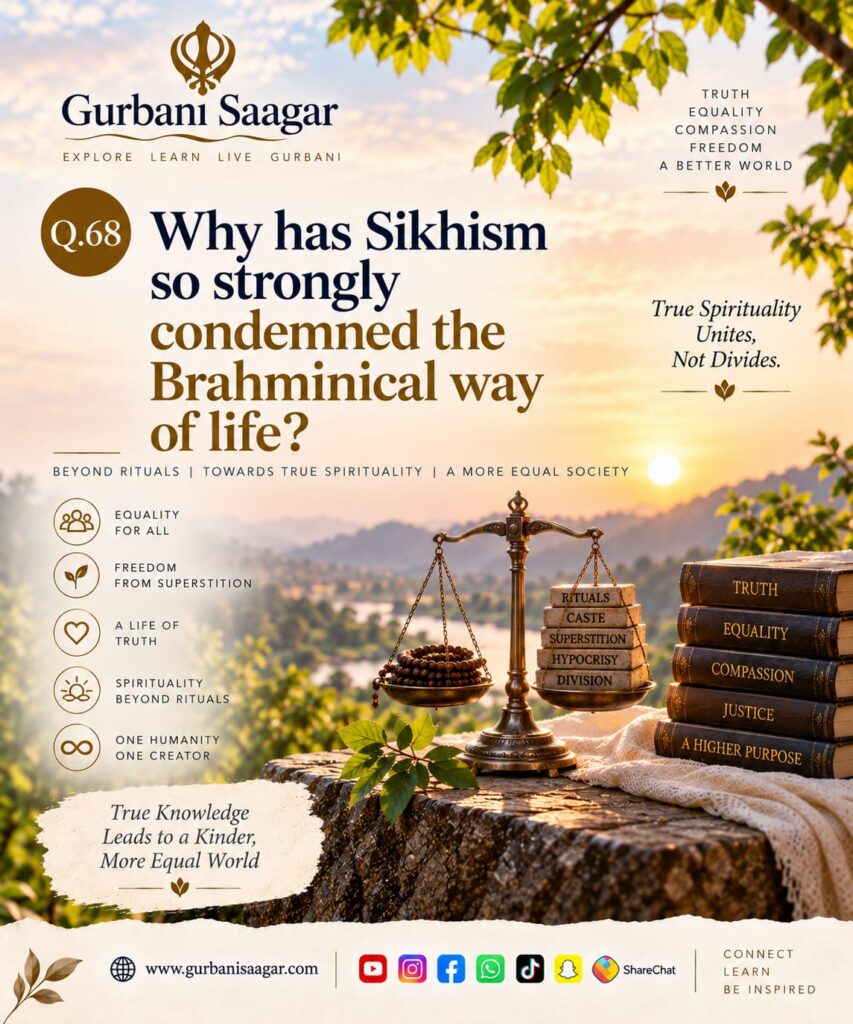
That is the reason why they issued such strong directive of never to adopt the Brahminical way of life. The Tenth Master went even a step further and said that if any Sikh ever adopted this way of life, he would lose all his credibility with him (the Guru).
The Brahmins considered themselves superior to all other human beings and had reserved all the rights and privileges for themselves. They had assumed the exalted position of gods and had thrown all others in the pit of spiritual slavery, thuscondemned to suffer for all times to come. The Brahmin’s way is to divide the society. For example:
1. The sacred thread worn by Brahmins has three strands, that of a Kshatriya has two, that of a Vaishya has a single strand and a Shudra cannot even wear a sacred thread. A Brahmin’s sacred thread is made of silk, that of a Kshatriya is cotton and the Vaishya’s is wool. The ceremony for a Brahmin to wear it is in Spring, for Kshatriya it is in Summer and for a Vaishya it is in Autumn. The age at which a Brahmin youth should wear the thread is 7 years, for a Kshatriya youth it is 9 years and for a Vaishya youth it is 11 years. But the Tenth Master finished this discrimination by making the Amrit available to all.
2. According to Brahminical way, only a Brahmin can accept donations. But according to the directive of the Gurus, donations should be given to all (needy) persons.
ਹਰਿ ਕਾ ਨਾਮੁ ਧਿਆਇ ਸੁਣਿ ਸਭਨਾ ਨੋ ਕਰਿ ਦਾਨੁ॥
(SGGS, P. 135.)
The Tenth Master said, “giving donations to saintly people is good, giving to anyone else has little merit”.Guru Arjan Dev has said even this for the Brahmins:
ਪੂਜਾ ਤਿਲਕ ਕਰਤ ਇਸਨਾਨਾਂ॥
ਛੁਰੀ ਕਾਢਿ ਲੇਵੈ ਹਥਿ ਦਾਨਾ॥੨॥
ਬੇਦੁ ਪੜੈ ਮੁਖਿ ਮੀਠੀ ਬਾਣੀ॥
ਜੀਆਂ ਕੁਹਤ ਨ ਸੰਗੈ ਪਰਾਣੀ॥
(SGGS, P. 201)
“He takes a bath, puts sacred mark on his forehead, and worships (idols).He recites the Vedic mantras with sweet and melodious voice, (but) forcibly extracts charity (as if by showing a knife) and does not hesitate killing beings”.
3. According to Brahminic way one should believe that impurity sticks to a house (family) under certain circumstances. For example, on hearing the death of a relative or the birth to a child, a Brahmin must immerse himself in water with all his clothes. According to Sikh teachings:
ਸਭੋ ਸੂਤਕੁ ਭਰਮੁ ਹੈ
(SGGS, P. 472)
“The idea of such an impurity is mere illusion”.
4. According to Brahminic way, the worship of ancestors and giving a feast to Brahmins annually in their (ancestors) memory is a must. According to Sikh way of life such rituals are against the advice of the Gurus.
5. According to Brahminic way it is necessary to plaster the kitchen with cow dung and draw a line (which no one should cross) while one is taking food because this is the way to worship gods; as if they live because of this ritual of plastering and drawing the line in the kitchen with cow dung. Brahmins preach that if one does not use cow dung for plastering the kitchen and drawing the line, then demons take away the taste of the food.
The directive of Guru Nanak Dev to the Sikhs is that the whole earth is our kitchen and those who recognize the Supreme Truth (God) are free from impurity:
ਪਾਂਡੇ ਐਸਾ ਬ੍ਰਹਮ ਬੀਚਾਰੁ॥
ਨਾਮੇ ਸੁਚਿ ਨਾਮੋ ਪੜਉ ਨਾਮੇ ਚਜੁ ਆਚਾਰੁ॥
(SGGS, P. 355)
“O Brahmin, contemplate God in such a way that His Name becomes your ritualistic purity as well as the study of the scriptures”.
A Sikh is not a fiat to every (god).
6. Brahmins preach the so-called Avtaar doctrine’, which means that from time to time God gets incarnated into human form. They have several such Avtaars in their mythological stories. But the Sikhs believe that these so-called Avtaars were only the kings at different times who ruled justly, and ignorant masses, by blindly following the cunning Brahmins, started worshipping them as Avtaars:
ਜੁਗਹ ਜੁਗਹ ਕੇ ਰਾਜੇ ਕੀਏ ਗਾਵਹਿ ਕਰਿ ਅਵਤਾਰੀ॥
ਤਿਨ ਭੀ ਅੰਤੁ ਨ ਪਾਇਆ ਤਾ ਕਾ ਕਿਆ ਕਰਿ ਆਖਿ ਵੀਚਾਰੀ॥
(SGGS, P. 423)
“(People) worship the kings, that ruled in different ages, as Avtaars. Even these so-called Avtaars could not gauge His (God’s) limits, How could a man describe His extant”?
To us Sikhs, the Guru’s commandment is:
ਸੋ ਮੁਖੁ ਜਲਉ ਜਿਤੁ ਕਹਹਿ ਠਾਕੁਰ ਜੋਨੀ ॥
(SGGS, P. 1136)
“Burnt be the mouth that utters, “God comes into womb”.
7. Brahmins lay stress on the performance of sacrificial rituals or Yags. There are several different categories of Yags.
The first category includes five types of Yags:
a) Brahm Yag
b) Pitri Yag
c) Dev Yag
d) Bhoot Yag
e) Atithi Yag.
These Yags must be performed. Then there are rituals to be performed occasionally.
These are of four types:
a) Sanskaar
b) Shanti
c) Varat (fast)
d) Praischit (penance).
The Sanskars are of forty types, the Shanti has nine “grihas” and the worship of god Ganesh. There are fifteen types of Varats or fasts along with which the recitation of Ramayan, Maha Bharat and Puranas (scriptural books) is necessary.
For Praischit or penance there are twelve types of rituals, which include learning and teaching of Vedas, performing of Yagnas and instigating others to do so. Give alms (charities) and accepting them. Ablutions at sacred places, havans (burning butter, dry fruits and spices in fire while reciting mantras) and worship of various gods (depending on the occasion and purpose) are other rituals recommended by Brahmins.
In every one of his six books on Sikhism, MaCaliff has written the following hymn from Guru Granth Sahib:
ਫੂਟੋ ਆਂਡਾ ਭਰਮ ਕਾ ਮਨਹਿ ਭਇਓ ਪਰਗਾਸੁ ॥
ਕਾਟੀ ਬੇਰੀ ਪਗਹ ਤੇ ਗੁਰਿ ਕੀਨੀ ਬੰਦਿ ਖਲਾਸੁ॥
“The eggshell of doubt is shattered and the mind illumined. The Master has freed (me) from the bonds (of Maaya) by snapping fetters from the feet”.
(SGGS, P. 1002)
A Sikh is never to follow the Brahminic way of life and remember the following stanza of Gurbani:
(SGGS, P. 1377)
ਬਾਮਨੁ ਗੁਰੂ ਹੈ ਜਗਤ ਕਾ ਭਗਤਨ ਕਾ ਗੁਰੁ ਨਾਹਿ॥
“The Brahmin may be the preceptor of the worldly (people), but he is not the preceptor of the devotees of God”.