
Sikhism, also known as Sikhi, is one of the world’s youngest major religions and one of the most spiritually profound paths focused on equality, devotion, and selfless service. Founded in the Punjab region of the Indian subcontinent during the late 15th century by Guru Nanak, Sikhism teaches the belief in one universal Creator and emphasizes truthful living, compassion, humility, and justice. Today, Sikhism is followed by nearly 25–30 million people worldwide, with the largest Sikh population living in India, especially in Punjab. Sikh communities are also strongly established in countries such as Canada, the United Kingdom, the United States, and Australia.
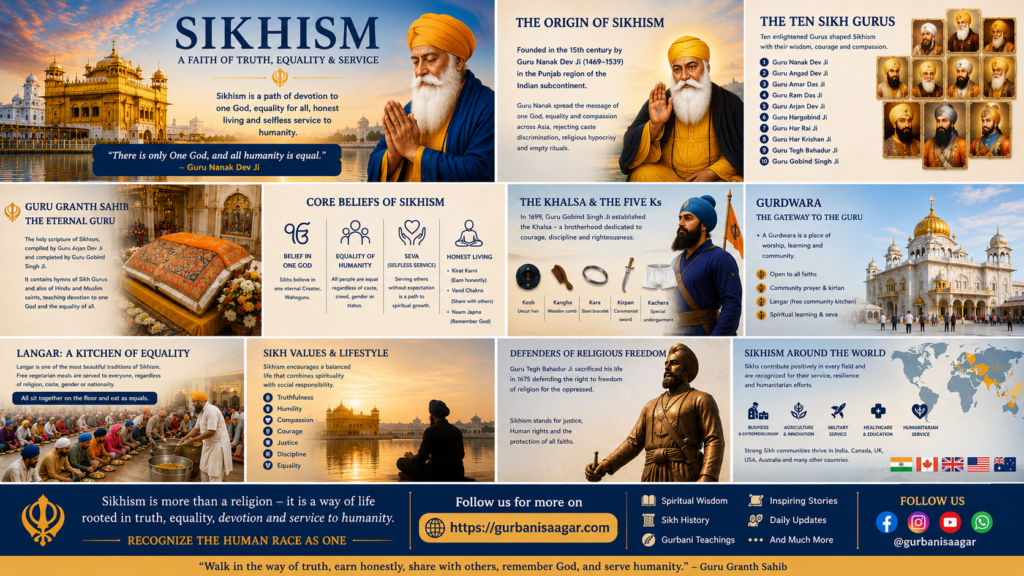
The Origin of Sikhism
Sikhism began with the teachings of Guru Nanak Dev Ji (1469–1539), who challenged social inequality, caste discrimination, religious hypocrisy, and empty rituals. During a period marked by political instability and religious divisions, Guru Nanak spread a universal message: “There is only One God, and all humanity is equal.”Guru Nanak traveled extensively across Asia and the Middle East, sharing spiritual wisdom and encouraging people to live honestly, remember God, and serve humanity. His teachings became the foundation of Sikh philosophy. The word “Sikh” comes from the Sanskrit word śiṣya, meaning “disciple” or “learner.” Sikhs are therefore considered seekers of truth and students of divine wisdom.
The Ten Sikh Gurus
After Guru Nanak, nine successive Gurus continued to shape and strengthen the Sikh faith. Each Guru contributed uniquely to Sikh philosophy, spirituality, and community development.
The Ten Sikh Gurus:
1. Guru Nanak – Founder of Sikhism
2. Guru Angad – Developed the Gurmukhi script
3. Guru Amar Das – Promoted equality and women’s rights
4. Guru Ram Das – Founded Amritsar
5. Guru Arjan – Compiled the Adi Granth
6. Guru Hargobind – Introduced the concept of Saint-Soldier
7. Guru Har Rai – Known for compassion and environmental care
8. Guru Har Krishan – Served the sick and suffering
9. Guru Tegh Bahadur – Martyred defending religious freedom
10. Guru Gobind Singh – Created the Khalsa and declared Guru Granth Sahib as the eternal Guru—Guru Granth Sahib:
The Eternal GuruThe holy scripture of Sikhism is the Guru Granth Sahib. Unlike many religious texts, Sikhs regard it not merely as scripture but as the eternal living Guru.Compiled initially by Guru Arjan Dev Ji and finalized by Guru Gobind Singh Ji, the Guru Granth Sahib contains hymns not only from Sikh Gurus but also from Hindu and Muslim saints, reflecting Sikhism’s universal outlook and message of unity. The scripture teaches:Devotion to one GodEquality of all humansHonest livingHumility and compassion. Meditation on God’s Name
Core Beliefs of Sikhism:
1. Belief in One GodSikhism is strictly monotheistic. Sikhs believe in one eternal Creator, commonly referred to as Waheguru.The opening phrase of the Guru Granth Sahib is: “Ik Onkar” – There is One Universal Creator.
2. Equality of HumanityOne of Sikhism’s strongest teachings is human equality. Sikh Gurus rejected:Caste discriminationGender inequalityReligious superioritySocial oppressionSikhism teaches that all people are equal regardless of race, religion, gender, or social status.
3. Seva (Selfless Service)Seva means serving others without expecting rewards. Sikhs believe helping humanity is a direct path to spiritual growth.Examples of seva include:Volunteering at GurdwarasFeeding the hungryDisaster relief effortsSupporting communities in need.
4. Honest LivingSikhs are encouraged to:Earn honestly (Kirat Karni)Share with others (Vand Chakna)Remember God through meditation (Naam Japna)These three principles form the foundation of Sikh daily life.
The Khalsa and the Five Ks:
In 1699, Guru Gobind Singh Ji established the Khalsa a spiritual brotherhood dedicated to courage, discipline, and righteousness. Baptized Sikhs follow the Five Ks:
Kesh – Uncut hair
Kangha – Wooden comb
Kara – Steel bracelet
Kirpan – Ceremonial sword
Kachera – Special undergarment
These articles symbolize commitment, discipline, and identity.

Gurdwara:
The Sikh Place of WorshipA Sikh place of worship is called a Gurdwara, meaning “Gateway to the Guru.”The most famous Gurdwara is Golden Temple, also known as Harmandir Sahib, located in Amritsar, Punjab. It is considered the spiritual center of Sikhism.
Key Features of a Gurdwara:
Open to people of all faithsCommunity prayer and kirtanLangar (free community kitchen)Spiritual learning and seva—Langar: The World’s Largest Free Community KitchenOne of the most beautiful Sikh traditions is Langar, where free vegetarian meals are served to everyone equally.Regardless of religion, caste, wealth, or nationality, all sit together on the floor and eat as equals. This practice reflects Sikhism’s commitment to equality and service.
Sikh Values and Lifestyle
Sikhism encourages a balanced life combining spirituality with social responsibility.Important Sikh Values:
Truthfulness
Humility
Compassion
Courage
Justice
Discipline
Equality
Sikhs are encouraged to remain spiritually connected while actively contributing to society.
Sikhism and Religious FreedomThroughout history, Sikhs defended the rights of all people to practice their faith freely.Guru Tegh Bahadur sacrificed his life defending religious freedom for oppressed Kashmiri Hindus during Mughal rule. This remains one of the most significant examples of interfaith sacrifice in world history.
Sikhism Around the WorldToday, Sikh communities contribute significantly across the globe in:
Business
Agriculture
Military
Service
Healthcare
Education
Humanitarian work
Countries like Canada and the UK have large and vibrant Sikh populations. Sikhs are recognized worldwide for community service, resilience, and charitable initiatives.
Why Sikhism Matters Today
In a world divided by conflict, inequality, and materialism, Sikhism offers timeless teachings centered on:
Unity
Humanity
Service
Spiritual awareness
Social justice
Its message remains deeply relevant in modern society.
Conclusion
Sikhism is more than a religion it is a way of life rooted in truth, equality, devotion, and service to humanity. Founded by Guru Nanak and guided by the Ten Gurus, Sikhism continues to inspire millions worldwide with its universal values and fearless commitment to justice and compassion.Whether through the wisdom of the Guru Granth Sahib, the selfless spirit of Langar, or the courage of the Khalsa, Sikhism stands as a powerful reminder that spirituality and humanity must walk together.
Waheguru Ji Ka Khalsa
Waheguru Ji Ki Fateh